One Health Perspectives of Infectious Disease Transmission
Broad-scale spatial patterns
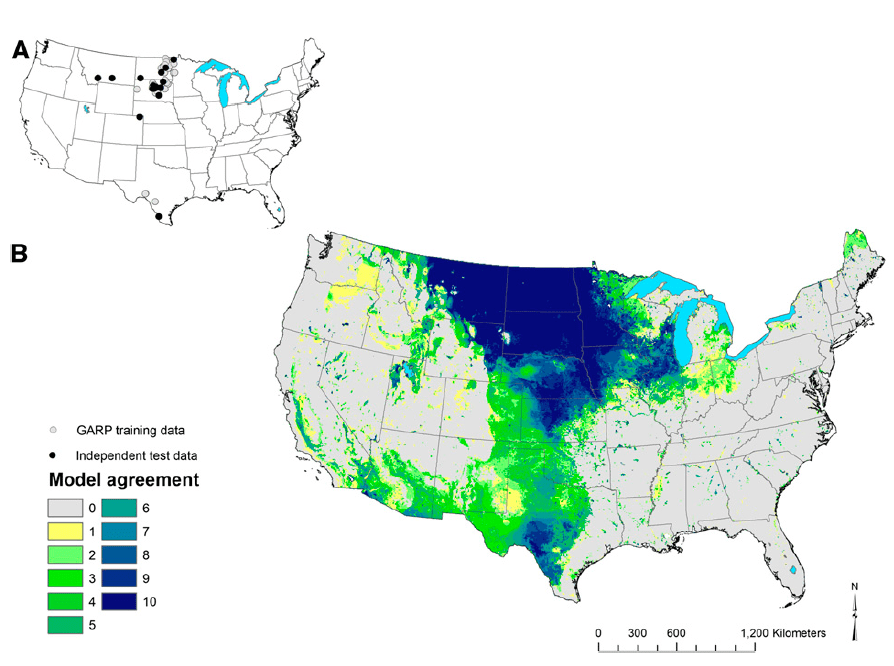
In this research, we are interested in where and when the disease occur on the landscape. To address that, we employ GIS and ecological models to predict the ecological niche and geographical distributions of hosts, vectors, and pathogens on the landscape to delineate the potential risk of disease transmission and how risk surface might change given climate and environmental change.
Some project we work on in this area include Anthrax and some vector borne diseases.
Local-level Transmission Mechanism Dynamics
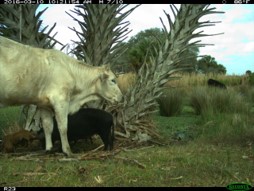
This research is based on a fine-scale investigation to identify individual heterogeneities in the disease transmission network. Particularly, we are interested in incorporating host movement, behaviors, and interactions in disease models to identify dynamic transmission hotspot on the landscape. Some projects we work on include brucellosis in cattle, African swine fever in wild pigs, and disease spillover at the wildlife-livestock interface.
Environmental/public Health
Parks and health

In 2020, people’s health suffered a great crisis under the dual effects of the COVID-19 pandemic and the extensive, severe wildfire in the western and central US. Parks play an important role in supporting physical and mental health during the pandemic and natural hazards. We estimate the human mobility patterns to parks and green space.
Extreme heat and environmental justice

This project is funded by NASA-Environmental and Equity Justice program to investigate heat vulnerability in Oklahoma City. This study is conducted with close collaboration with City of OKC sustainability office and OKC beautiful. We used both a top-down, data-driven approach to develop heat vulnerability index (HVI) for OKC which was published on city’s website and a bottom-up approach to engage with underserved communities to generate community-driven HVI.
Neighborhood park design and equity
More to come later
Citizen Science, Conservation, Ecosystem Health
Environmental changes and avian conservation
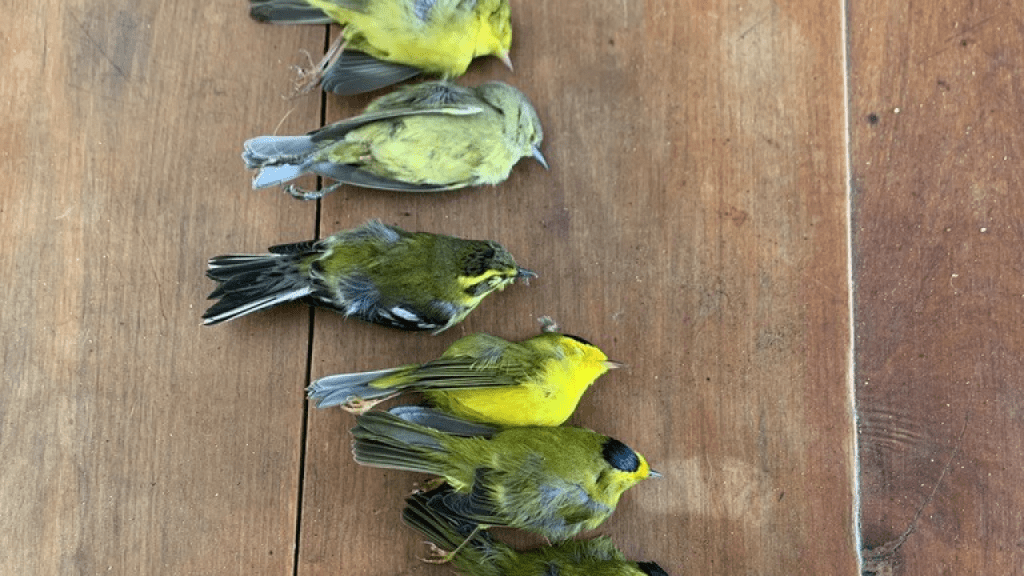
In August-September 2020, numerous dead birds were found and reported on the citizen science platform. During the same period, a number of large wildfires have occurred across the western and central US. This study applies the geospatial models to understand the spatial relationship between wildfires and bird mortality occurrences in western and central US. See more at https://eos.org/research-spotlights/mass-bird-die-off-linked-to-wildfires-and-toxic-gases.; https://www.thedenverchannel.com/money/science-and-tech/study-mass-bird-deaths-in-colorado-due-to-toxic-gases-from-wildfires.
 Spatial Disease Ecology and Health Lab